Prevention of Common Decomposition Phenomena in PVC Material Injection Molding Die Processing
PVC is a widely used thermoplastic in industry, applied in pipes, fittings, and profiles for its low cost and good moldability. However, it has poor thermal stability—its molding temperature range (160-200℃) is close to its decomposition temperature. Slight oversight in injection molding die processing can cause decomposition, leading to product yellowing, burnt spots, and HCl gas that corrodes die cavities, even resulting in batch scrapping. The spline testing die, a core tool for pre-judging decomposition risks, verifies material compatibility and die performance before mass production, making it key to preventing such issues. Below is a detailed analysis based on real production scenarios.
1. Core Functions and Practical Points of Spline Testing Dies
1.1 Core Purpose
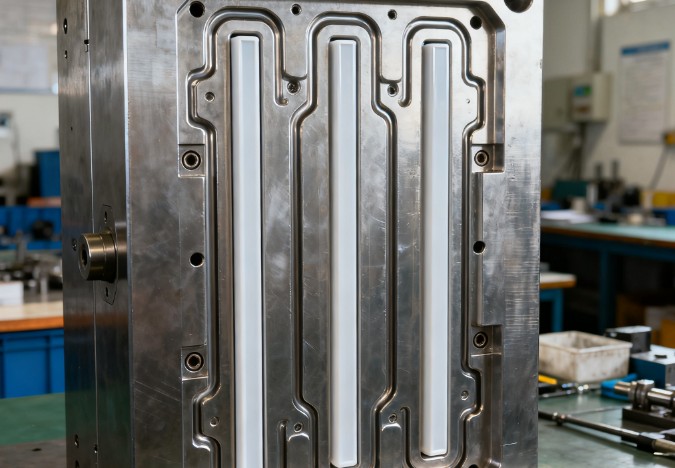
Spline testing dies assess PVC’s thermal stability and molding compatibility per standards like GB/T 1040. They produce standard splines (for tension, impact tests) to show material behavior in the die, exposing hidden risks (e.g., poor formulas or insufficient ventilation) early. This avoids cost waste from later die adjustments or material changes, making them essential for small-to-medium-batch PVC production.
1.2 Key Structural Design
Die Core Material: To resist acidic corrosion from PVC decomposition, manual testing dies use Cr12MoV alloy steel (HRC 58-62 after quenching), while automatic ejection dies use S136 stainless steel (higher hardness after cryogenic treatment). Surface roughness is controlled at Ra ≤ 0.2μm to prevent material sticking.
Ventilation & Runner Design: Vent grooves (0.03-0.05mm deep, 6mm wide) and cold slug wells at gates prevent unplasticized cold material from forming hot spots. Runners are circular (≥6mm diameter) to avoid melt overheating from prolonged residence.
Ejection System: Hydraulic ejector pins for automatic dies have adjustable speed (5-50mm/s) and 0.5-2s delay, ensuring undamaged splines that reflect molding quality (e.g., fine burnt spots).
1.3 Decomposition Warning Testing
Simulate mass production parameters: barrel temperature (140-160℃ for feeding section, 170-190℃ for front section), die temperature (30-60℃), and screw speed (50-80rpm). Judge decomposition by spline appearance: light brown stripes 30mm from the gate indicate over-shear from fast injection; bubbles or hot spots mean poor ventilation, requiring groove cleaning or process tweaks.
2. Main Causes of PVC Injection Die Decomposition
2.1 Material & Formula Issues
Insufficient Heat Stabilizer: Heat stabilizers (standard 2-5 parts) inhibit decomposition. Too little or low-quality stabilizers reduce thermal stability—critical for thick-walled products, where trapped heat quickly causes burnt spots.
Impure Raw Materials: High impurities in PVC resin or over 20% recycled material break the thermal stability system. Raw materials with >0.05% moisture generate steam during heating, creating local high temperatures in the cavity.
Imbalanced Lubricants: Insufficient internal lubricant increases melt-die friction (extra heat); excessive external lubricant precipitates as hot spots. Both raise decomposition risks.
2.2 Die Design & Maintenance Defects
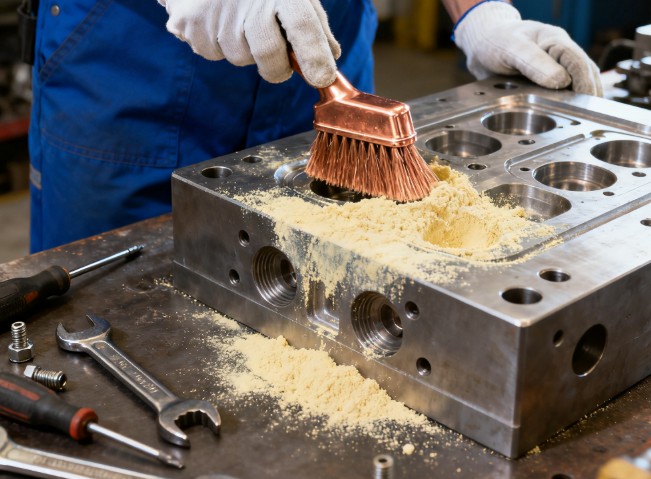
Poor Ventilation: Long-term use leaves carbides in vent grooves; without cleaning, ventilation efficiency drops by over 50%, trapping gas that causes local overheating.
Cavity Surface Problems: Scratches or roughness (Ra > 0.4μm) block melt flow, creating retention areas. Unplated steel cavities corrode from HCl, worsening material buildup.
Faulty Cooling Systems: Wide or blocked water channels cause die temperature fluctuations (>±5℃), slowing melt cooling and prolonging residence—risky for thick-walled products.
2.3 Improper Process Parameters
Excessive Temperature: Nozzle temp >190℃ or barrel front temp >200℃ exceeds PVC’s stability limit. Screw-barrel eccentricity generates local heat, even with normal overall temps.
Long Residence Time: Actual injection volume <20% of barrel capacity leads to >5 minutes of material residence, causing rapid degradation and burnt material.
Over-Shear Stress: Screw speed >80rpm or back pressure >8MPa damages the thermal stability system, creating radial burnt stripes on splines and reducing melt flow.
3. Systematic Prevention Strategies
3.1 Raw Material & Formula Control
Optimize Stabilizers: Add 1-2 extra parts of stabilizer for thick-walled products (>5mm). Use calcium-zinc composite stabilizers (eco-friendly, long-lasting) instead of low-quality lead salt variants.
Ensure Material Purity: Choose PVC resin with <0.1% impurities; limit recycled material to <20%. Dry materials to <0.05% moisture before use.
Balance Lubricants: Mix internal (e.g., stearic acid) and external (e.g., paraffin) lubricants at 1:1.2. Verify via splines—smooth surfaces and easy demolding mean a good ratio.
3.2 Die Maintenance & Optimization
Regular Maintenance: Clean vents weekly (with a fine copper brush) and polish corroded cavities to Ra ≤ 0.2μm. Unclog cooling channels quarterly.
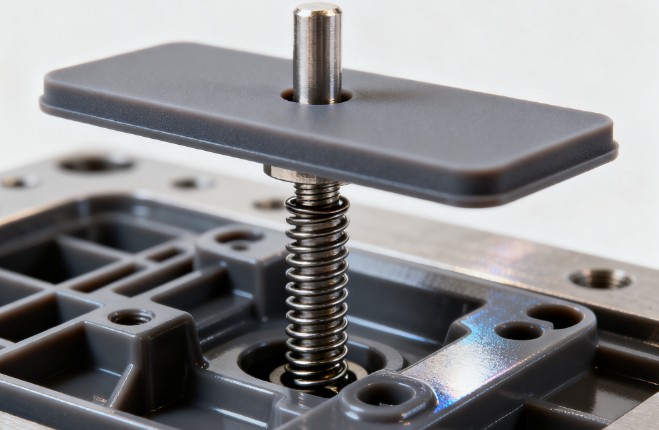
Structural Tweaks: Add 1-2 auxiliary vents (0.03mm deep) for poor ventilation; widen runners at retention areas (e.g., spline corners).
Anti-Corrosion Measures: Plate new die cavities with 5-10μm hard chrome. Apply anti-rust oil to idle dies to prevent oxidation.
3.3 Process Parameter Optimization
Precise Temperature Control: Lower barrel front temp by 5-10℃ if splines have burnt spots; keep nozzle temp at 180-190℃ and avoid empty injection.
Control Residence & Shear: Use injection machines matching product weight (actual volume ≥30% of barrel capacity). Set screw speed at 50-80rpm and back pressure at 3-5MPa—uniform, stripe-free splines mean proper shear.
Optimize Cooling: Keep cooling water at 25-35℃. Extend cooling time by 2-3s per 1mm of wall thickness to avoid internal overheating.
4. Conclusion
Decomposition in PVC injection molding stems from mismatched "material thermal stability, die structure, and process parameters." Spline testing dies shorten troubleshooting cycles and reduce losses. In practice, optimizing formulas, maintaining dies, and controlling processes precisely prevent decomposition. With the rise of eco-friendly PVC (e.g., lead-free stabilizers), ongoing die and process adjustments via spline testing will ensure stable production and quality.