Demand for customized food-grade, environmentally friendly, and high-temperature resistant plastic products is rising steadily in food processing, medical packaging, and industrial manufacturing, driven by upgraded industry standards and market needs. Beyond basic functionality, these products must meet stringent safety, environmental, and extreme condition adaptability requirements. As a core pre-mass-production quality control step, test specimen molds directly determine product performance stability and compliance. Drawing on the latest injection molding trends, this article elaborates on key customization points from three aspects—technical requirements, test specimen mold design and application, and production process optimization—providing practical industrial references.
Safety and Compliance for Food-Grade Plastic CustomizationCustomized food-grade plastic products must strictly comply with GB 4806.7 - 2016 and FDA 21 CFR Part 177, covering migrant limits, heavy metal content, and sensory requirements. Raw materials shall be food-grade resins such as PP, PE, and food-grade ABS, with formaldehyde, lead, and chromium migration ≤0.05mg/dm2.
Products must be odor-free, and high-temperature food contact containers must pass a 24-hour immersion test in 100°C hot water to prevent harmful substance release.
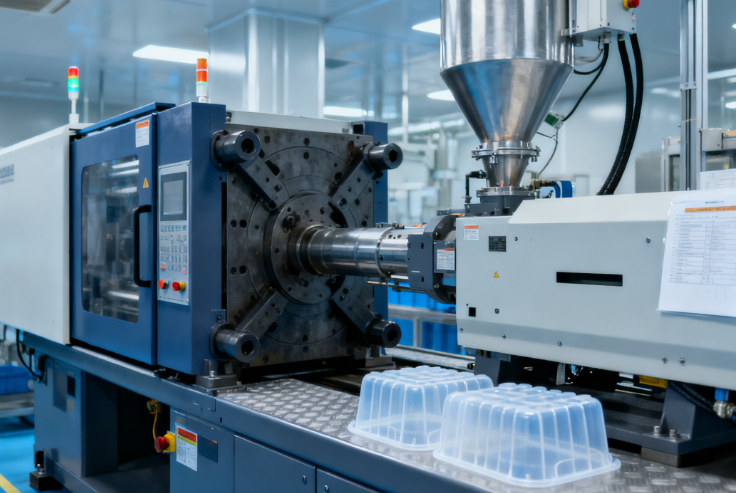
Core Indicators for Environmentally Friendly Plastic CustomizationFocusing on "low pollution, recyclability, and biodegradability," current trends center on bio-based and recycled plastics. Products must meet GB/T 20197 - 2006, with fully biodegradable plastics achieving a biodegradation rate ≥90% (CO?-based). Common materials include PLA, PHA, and certified recycled PET. Production must reduce VOC emissions, with unit energy consumption 15% lower than traditional processes, aligning with green manufacturing.
Performance Thresholds for High-Temperature Resistant Plastic CustomizationIndustrial-grade products require a continuous service temperature range of -40°C to 150°C, while special parts like automotive engine components withstand over 200°C. Complying with GB/T 1634.2 - 2019, products must have a heat distortion temperature (HDT) ≥120°C, tensile strength ≥35MPa, and elongation at break ≥25%. Raw materials include PPS, PEEK, and modified PA66, with glass/carbon fiber modification enhancing thermal stability and mechanical strength.
Targeted Design of Test Specimen MoldsTest specimen molds, critical for performance verification, require differentiated design. Cavity precision is controlled within ±0.005mm using S136 mold steel inserts. Food-grade molds feature mirror-polished runners (Ra ≤0.02μm) to avoid contamination; environmentally friendly plastic molds use wide gates and hot runners to reduce weld lines; high-temperature resistant plastic molds are equipped with cooling channels and insulation layers. All molds have pressure sensor mounting holes for real-time cavity pressure monitoring.
Performance Testing Based on Test Specimen MoldsStandard dumbbell/rectangular specimens undergo rigorous testing. Food-grade specimens are tested for heavy metals via ICP-MS and organic residues via GC. Environmentally friendly specimens undergo composting tests and mechanical property decay checks. High-temperature resistant specimens endure 1000-hour thermal aging at 150°C, requiring tensile strength retention ≥80% without deformation. These data serve as the core basis for mass production, avoiding batch rework.
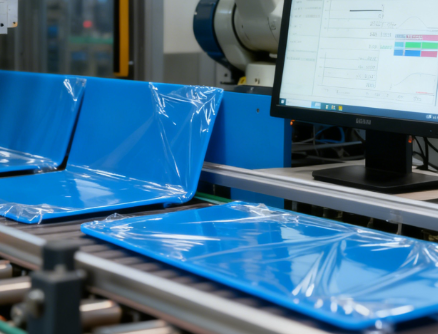
Quality Control Process with Test Specimen MoldsTest specimen molds form a closed-loop "design - mold testing - performance testing - optimization" system. Initial specimens verify raw material suitability; 3% of trial production batches are sampled for testing; daily pre-production mold tests confirm injection parameter stability. Digital mold flow analysis predicts defects in advance, cutting commissioning time by 20% and improving efficiency by 30%.
Raw Material Selection and Modification AdaptationFood-grade products use pure material injection at 160°C - 220°C to prevent contamination. Environmentally friendly bio-based plastics adopt low-temperature injection (10 - 20°C lower than traditional processes) with compatibilizers. High-temperature resistant plastics require 300°C - 380°C injection with nitrogen protection. Glass/carbon fiber modifiers enhance both thermal resistance and environmental performance for composite needs.
Refined Adjustment of Injection ParametersInjection pressure is controlled at 80 - 120MPa, with holding pressure at 60% - 80% of injection pressure to avoid defects. High-speed injection (50 - 80mm/s) ensures uniform wall thickness for thin-walled food containers.
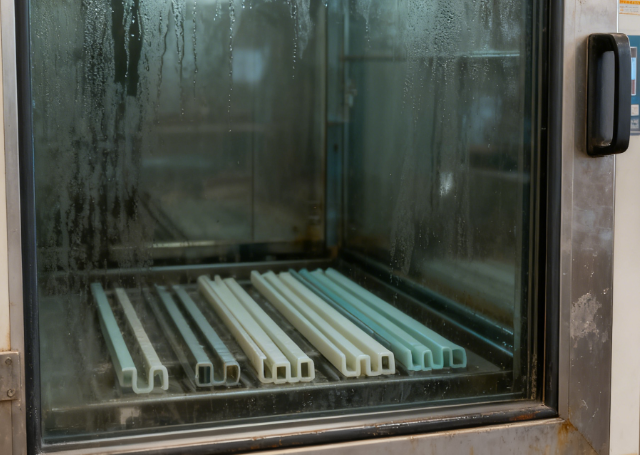
Environmentally friendly products have 15% shorter cooling cycles; high-temperature resistant products use extended holding time (15 - 25s) to release internal stress.
Environmental and Safety Enhancement in Post-ProcessingFood-grade products undergo deburring, cleaning with food-grade agents, and drying below 60°C. Environmentally friendly products prohibit heavy metal additives, with scrap recovery rates over 85%. High-temperature resistant products undergo 2-hour annealing at 120°C. Automated post-processing ensures cleanliness and efficiency.
Customization of these three plastic product types faces increasingly strict technical and quality requirements. Test specimen molds are key to competitiveness. Future development will focus on safety, low carbon, and high performance, driven by bio-based material breakthroughs, digital injection molding, and stricter environmental standards. Enterprises must optimize mold design, and strengthen material-process-post-processing collaboration to meet market demands and promote green, efficient industrial development.