Custom plastic mold manufacturing is a core service in precision manufacturing, widely applied in automotive lighting, medical devices, consumer electronics, and optical instruments. Its quality directly determines the dimensional accuracy, appearance, and mass production stability of injection-molded products. As market demands evolve from traditional ±0.03mm to ±0.01mm precision, mold design rationality, machining accuracy, and process adaptability have become industry competition cores. This guide covers full-process technical key points, integrating key data and trends to serve demanders, while addressing high-precision optical and lens-specific customization needs.
For materials like PC, PMMA, ABS, and products such as lenses and precision housings, use UG/SolidWorks for 3D modeling and Moldflow simulation to predict melt flow, avoiding sink marks and weld lines. Cavity dimensional tolerance is controlled within ±0.005mm (GB/T 14486-2013). Lens molds adopt aspherical modeling with curvature deviation ≤0.002mm to ensure imaging accuracy.
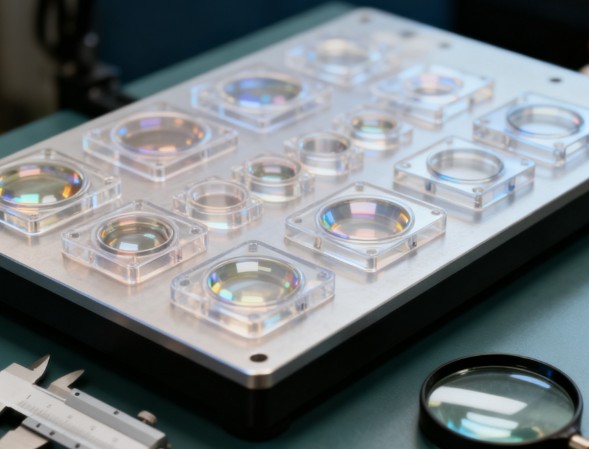
High-precision optical molds use S136 stainless steel (HRC 58-62) for Ra≤0.02μm surface roughness and ≥92% product transmittance. General molds adopt H13 hot work die steel (heat resistance ≥600℃), with 40% improved wear resistance after nitriding and 500,000-800,000 shot service life. Medical-grade molds use corrosion-resistant stainless steel for clean environments.
Needle valve hot runners (0.6-1.0mm gate, ±1℃ temperature control) suit optical products to avoid gate marks. Ordinary molds use open hot runners for efficiency. Conformal cooling channels (15-25mm spacing, ≤±2℃ temperature difference) shorten cooling cycles to 10-30s.
Follow "rough machining - semi-finishing - finishing - polishing": five-axis machining (±0.02mm roughing), wire-cutting (±0.003mm finishing), and EDM for lens mold complex surfaces (≤0.001mm micro-precision). Real-time detection with CMM and laser interferometer ensures data closure.
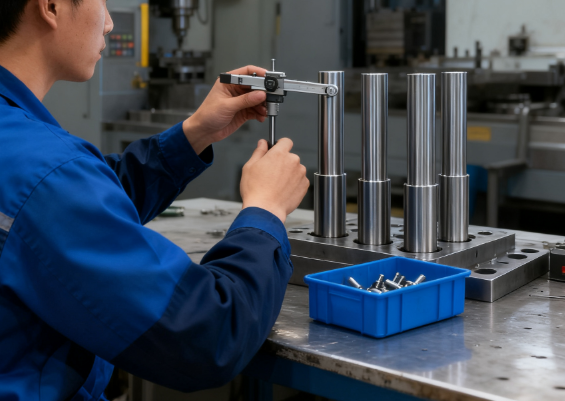
Optical molds undergo 1200#-3000# mirror polishing (Ra≤0.01μm). Wear-resistant molds use PVD coating (3-5μm, HV≥2000). Medical molds adopt electrolytic polishing to meet GMP standards.
Guide pillars/sleeves use 0.001-0.002mm gap fit; ejector pins have ≤0.003mm gap to prevent flash. After assembly, 500-cycle idle tests and pressure tests (clamping force deviation ≤5%) ensure stability.
Establish a design standard library and cross-departmental reviews to verify drawing consistency and injection machine adaptability. CAE simulation predicts defects like insufficient filling to optimize designs.
Implement the "three-inspection system" (self/mutual/special inspection) with 100% core dimension coverage. Optical molds add 3D scanning to ensure ≤0.004mm profile deviation.
Small-batch trials (1,000-3,000 pieces) use actual raw materials with parameters (200-320℃, 70-130MPa, 5-15s holding time). Test dimensional qualification rate (≥98%), appearance, and mechanical properties (tensile strength ≥50MPa, impact strength ≥18kJ/m2) for fine-tuning.
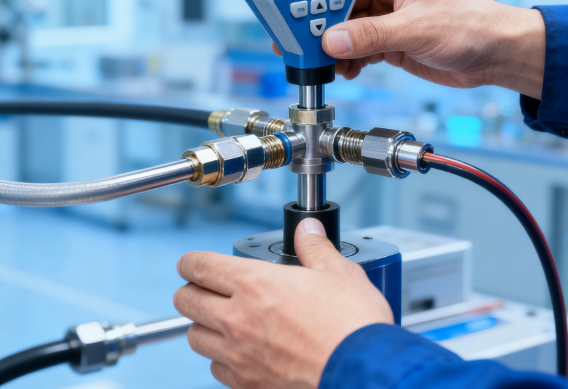
Intelligence (AI vision inspection boosts efficiency by ≥25%), digitalization (metal 3D printing shortens complex mold cycles by 40%), and environmental protection (water-soluble cutting fluids, RoHS/REACH compliance) are key trends.
Automotive: H13 steel + nitriding (500,000-shot wear resistance); Medical: 316L stainless steel + electrolytic polishing; Consumer electronics: 15-25-day delivery via five-axis machining; Optical: S136 steel + mirror polishing (≥90% transmittance, ≤0.5% haze).
The core of custom plastic mold manufacturing lies in "precise adaptation" and "full-process control". With advancing precision manufacturing, it will grow more intelligent, efficient, and eco-friendly, meeting diverse industry demands for high-stability molds.