Unlocking Hot Runner Injection Molds: The Technical Code for Efficient Molding
Hot runner injection molds, as core technical equipment in modern injection molding, break the design limitations of traditional cold runner molds by maintaining a continuous molten state of the melt in the runner. They fundamentally address pain points such as runner scrap waste, long molding cycles, and poor product consistency in cold runner technology. Widely used in high-precision mass production fields like auto parts, 3C electronics, and medical consumables, hot runner technology is a key enabler for improving production efficiency and product quality—especially in test bar molds requiring extreme precision and repeatability. Industry data shows that hot runner molds increase material utilization from 60%-75% (traditional cold runner) to over 90%, shorten molding cycles by 20%-30%, and control dimensional accuracy fluctuation within ±0.02mm, making them a crucial driver for manufacturing transformation.
I. Overview of Hot Runner Injection Molds
Hot runner injection molds are specialized tools with built-in heating systems to keep plastic melt in the runner molten during molding. Key components include hot nozzles, manifold, temperature control system, cavity plates, and mold bases. Unlike cold runner molds, they eliminate runner scrap by directly injecting molten material into cavities, enabling scrap-free molding. Suitable for general plastics (e.g., PP, ABS) and high-temperature engineering plastics (e.g., PEEK, LCP), they excel in both mass production and high-precision sample testing. Currently the mainstream in injection molding, hot runner technology evolves toward precise temperature control, flow balance optimization, and modular design to adapt to complex product structures and stringent production requirements.

II. Principles of Efficient Molding
Basic Working LogicHot runner molds use heating elements to continuously heat nozzles, manifolds, and runners, maintaining the melt at 5-15℃ above its melting point to prevent solidification after exiting the injection machine barrel. During molding, the melt enters the manifold via the main runner, is evenly distributed to hot nozzles, and injected into cavities for cooling. Upon mold opening, finished products are directly ejected without runner scrap handling, enabling continuous efficient cycles. Synergy between heating and temperature control systems ensures minimal injection pressure loss and maximum filling efficiency.
Heat Control and Transfer MechanismHeat control adopts a "zoned heating + precise feedback" model. Heating elements are installed in zones: circumferential heating coils for nozzles and built-in heating tubes for manifolds, ensuring uniform heat coverage. Heat transfers primarily by conduction (heater → runner wall → melt) with insulation layers reducing heat loss to the mold base, achieving over 75% thermal efficiency. Temperature control systems use thermocouples to collect real-time data, with PID regulation in temperature controllers limiting zone temperature fluctuation to ±1℃, preventing material degradation from overheating or incomplete filling from undercooling.
Quality Enhancement PrinciplesStable melt temperature reduces shear heating and thermal decomposition, lowering defect rates (e.g., bubbles, silver streaks) and improving yield by 10%-15%. Scrap-free design shortens melt residence time, avoiding material aging and ensuring consistent product performance. Reduced pressure loss in runners stabilizes filling pressure, enhancing dimensional accuracy and surface finish—ideal for thin-walled, complex parts with controlled wall thickness uniformity.
III. Key Technology Analysis
1. Hot Runner System Design
Hot nozzles are tailored to product structures and material properties: open nozzles for thin-walled parts and fast filling (suitable for high-flow plastics); valve-gated nozzles for appearance parts and precision samples (eliminating gate marks via valve control). Design ensures tight nozzle-cavity sealing and optimized flow path fillets to minimize melt retention.
Manifolds uniformly distribute melt to nozzles via "equal-length, equal-diameter" runners (circular / cross-sections). Made of nitrided heat-resistant mold steel (enhancing wear resistance and thermal conductivity), they use built-in heating tubes to maintain temperature uniformity, preventing uneven melt flow.
2. Precise Temperature Control Technology
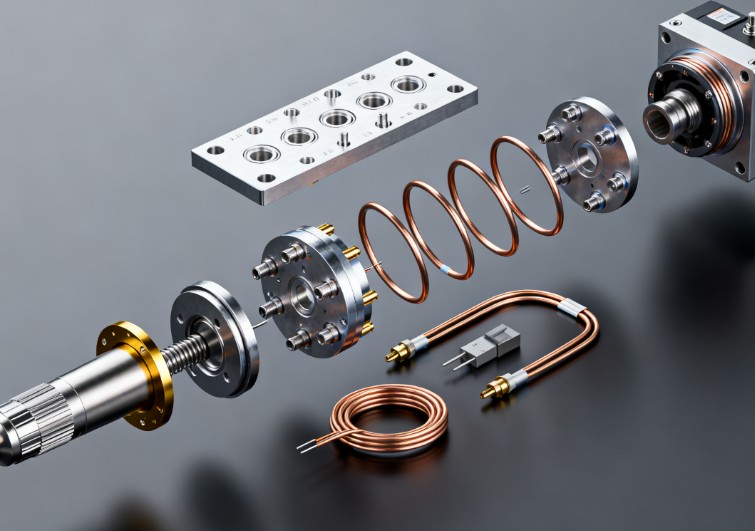
Temperature control systems consist of controllers, thermocouples, heaters, and wiring. Thermocouples are installed inside runner walls for accurate detection. PID-controlled controllers enable zone-specific temperature regulation with high precision. Advanced systems integrate IoT modules for real-time monitoring and remote debugging, adapting to smart production.
Temperature fluctuations impact melt flow and quality: overheating causes material degradation; undercooling increases viscosity (leading to incomplete filling/weld lines). Countermeasures include material-specific temperature settings, zoned heating, regular calibration of thermocouples/controllers, and insulation pads between the mold base and hot runner components.
3. Plastic Flow Balance Technology
Multi-cavity molds require "synchronized filling" with minimal gate size variation and valve opening time differences. Gates are positioned away from critical surfaces/load-bearing areas. Dynamic gate control adjusts valve opening speed for irregular products, compensating for flow path differences.
Runner dimensions are calculated based on material viscosity and filling distance, with diameter matching plastic type. Shear rate is controlled within a reasonable range to avoid material performance degradation. Filleted runner bends reduce pressure loss, ensuring consistent cavity filling.
IV. Core Applications in Test Bar Molds
Special RequirementsTest bar molds produce samples complying with GB/T 1040, ISO 527, etc., requiring ±0.02mm dimensional accuracy and ≤2% mechanical property repeatability. They must adapt to diverse materials (general to high-temperature engineering plastics) and enable rapid test program switching. Small-batch, multi-variety production demands high mold debugging efficiency and material utilization.
Technical Adaptation SolutionsPrecise temperature control ensures consistent melt temperature, keeping mechanical property deviations within limits. Valve-gated nozzles eliminate gate marks, ensuring reliable test data. Flow balance design ensures uniform sample performance in multi-cavity molds. Scrap-free design reduces material waste (to below 5%)—critical for expensive engineering plastics—and shortens cycles, boosting test efficiency. Modular hot runner design allows quick nozzle/runner replacement for different sample specifications.

Practical Application EffectsA 4-cavity ISO 527 tensile test bar mold with a valve-gated hot runner system (strict manifold flow path length tolerance, ±0.5℃ temperature control) produces PA66+30% glass fiber samples with ±0.015mm dimensional tolerance and ≤1.5% tensile strength repeatability. Compared to cold runner molds, test efficiency increases by 40% and material utilization reaches 95%. For PEEK test bars, precise temperature control prevents material degradation, reducing elongation at break data dispersion by 60% and providing reliable material performance evaluation.
V. Production Applications and Technical Trends
Main Application ScenariosHot runner molds are widely used in auto parts (sensor housings, interior components), 3C electronics (phone frames, connectors), and medical consumables (syringe parts)—dominating high-precision mass production. They also shorten R&D cycles and reduce trial production costs in test bar molding and new product development.
Existing ChallengesChallenges include high temperature control requirements for engineering plastics (risk of runner clogging), complex flow balance design for intricate cavities (needing repeated debugging), and higher initial investment than cold runner molds (a barrier for SMEs).
Development TrendsHot runner technology evolves toward intelligence, modularization, and high efficiency. Smart systems integrate sensors for real-time temperature/pressure monitoring and adaptive adjustment. Modular design enhances component interchangeability, reducing mold changeover/debugging time. Material adaptability expands to biodegradable plastics and high-performance composites. Future integration with Industry 4.0 will enable digital production control, supporting efficient, precise manufacturing.