Technical Specifications for Automotive, Electronic, and Medical Sample Test Molds
Sample test molds are core process equipment connecting material R&D and mass production. Their precision, stability, and adaptability directly determine the reliability of sample test data, thereby influencing the performance verification and iteration efficiency of end products. In the three high-end manufacturing fields of automotive, electronics, and medical care, sample test molds require customized design based on industry characteristics to meet the rigorous requirements of material performance testing and adapt to production processes and technical standards in different scenarios. This document elaborates on the core technical points, application scenarios, and development trends of the three types of molds, providing practical references for industrial production and R&D.
I. Automotive Sample Test Molds
Core Structural Design RequirementsThe mold structure must adapt to mainstream sample test types in the automotive industry, including tensile test samples, impact test samples, and bending test samples. Cavity design strictly complies with industry test standards such as ISO 6239 and GB/T 16491. For sample requirements of different automotive components (body structural parts, interior parts, power system components), a modular cavity design is adopted to support quick replacement of cavity modules for preparing samples of various sizes. The demolding mechanism integrates ejector pins and gas-assisted demolding to avoid stress damage or dimensional deformation of samples during demolding, ensuring the accuracy of sample testing.
Key Technical Parameters
Dimensional accuracy: Cavity dimension tolerance controlled within ±0.005mm, sample thickness tolerance ≤±0.01mm, meeting the precision requirements of automotive material mechanical performance testing.
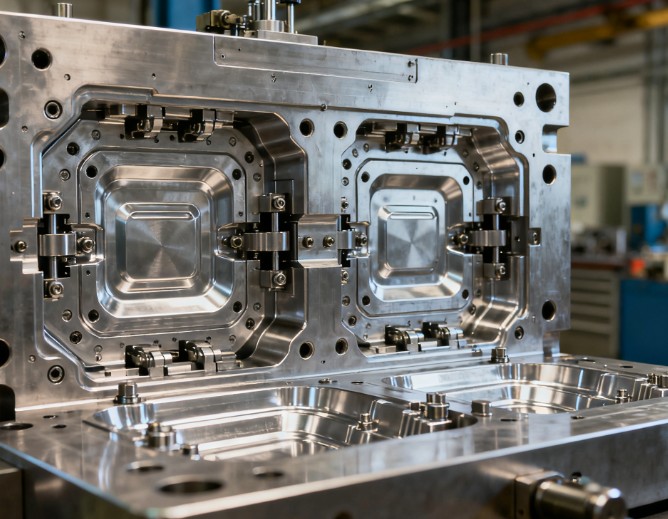
Working environment adaptability: Mold operating temperature range covers -40℃~150℃, withstanding extreme environmental simulation test requirements for automotive components.
Material selection: Mold cores use H13 hot work tool steel or P20 pre-hardened steel, achieving a hardness of HRC 38-42 after quenching and tempering, with excellent wear resistance and fatigue resistance.
Production efficiency: Single molding cycle ≤30 seconds, multi-cavity molds can realize synchronous molding of 4-8 pieces, adapting to small-batch, multi-batch sample requirements in the R&D stage.
Production Application ScenariosMainly used for preparing samples of automotive metal materials (high-strength steel, aluminum alloy, magnesium alloy), plastic materials (PP, PC/ABS, PA66), and composite materials (carbon fiber-reinforced resin matrix composites). After molding, samples undergo key performance tests such as tensile strength, yield strength, impact toughness, and aging resistance, providing core data support for automotive lightweight design, component reliability verification, and material selection. In the new energy vehicle field, it can also adapt to flame retardancy and weather resistance sample testing requirements for battery pack shell materials and charging pile shell materials.
Technical Development TrendsDriven by the automotive lightweight and new energy trends, molds are developing towards composite material molding adaptation. Cavity runner design is optimized to ensure uniform distribution of reinforcing materials such as carbon fiber and glass fiber. Meanwhile, digital technology is integrated, using CAE mold flow analysis to simulate material filling processes and optimize cavity structures in advance to reduce internal sample defects. In addition, mold surfaces are treated with nano-coatings to reduce material adhesion, improving demolding efficiency and mold service life.
II. Electronic Sample Test Molds
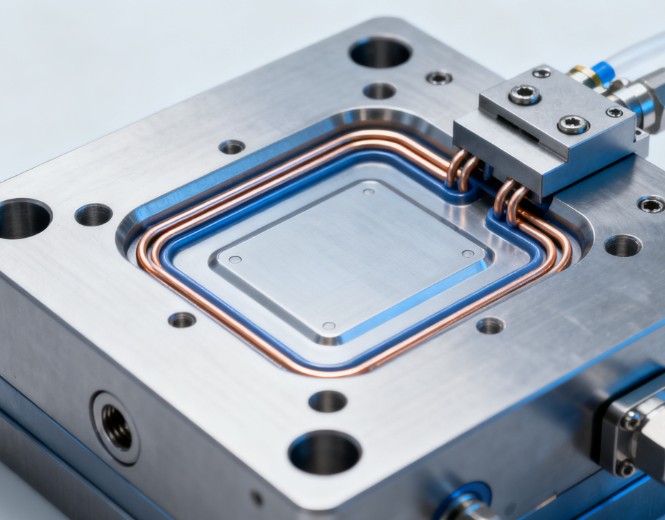
Core Structural Design RequirementsTargeting the miniaturization and high-precision characteristics of electronic components, molds adopt micro-cavity design with a minimum cavity size of 0.5mm×0.3mm, supporting sample preparation for micro-components such as chip packaging, electronic connectors, and sensors. A multi-cavity integrated structure is adopted, with a single mold capable of synchronous molding of 16-32 cavities to improve the production efficiency of micro-samples. Molds are equipped with precise temperature control systems, using embedded heating tubes and cooling channels to control cavity temperature fluctuation ≤±1℃, ensuring the dimensional stability of micro-samples.
Key Technical Parameters
Dimensional accuracy: Cavity dimension tolerance ≤±0.002mm, sample coaxiality error ≤±0.003mm, meeting the precision requirements of electronic component assembly.
Surface quality: Mold cavity surface roughness Ra≤0.08μm, with no burrs or shrinkage marks on sample surfaces, ensuring the electrical performance and contact reliability of electronic components.
Material selection: Mold cores preferably use S136 stainless steel or beryllium copper alloy. Beryllium copper molds have a thermal conductivity ≥350W/(m·K), adapting to the molding of electronic materials with high thermal conductivity and insulation requirements.
Mold change efficiency: Quick mold change mechanisms are adopted, with mold change time ≤10 minutes, supporting rapid switching production of multi-variety, small-batch electronic samples.
Production Application ScenariosAdapting to the preparation of samples of semiconductor packaging materials (epoxy resin, silica gel), electronic connector materials (brass, phosphor bronze), and PCB substrate materials (FR-4, polyimide). Samples are mainly used for electrical performance testing (conductivity, insulation resistance), mechanical performance testing (insertion and extraction force, bending life), and environmental reliability testing (high-low temperature cycling, damp heat aging), providing data support for the miniaturization and high integration of electronic products. In the 5G communication and IoT device fields, it can meet the sample performance verification requirements of high-frequency and high-speed transmission components.
Technical Development TrendsFacing the rapid iteration needs of the electronic industry, molds are developing towards integrated molding and digital monitoring. 3D printing technology is used to manufacture conformal cooling cavities, further improving temperature control precision and molding efficiency. IoT technology is integrated, embedding temperature and pressure sensors inside molds to real-time monitor key parameters during the molding process, realizing online traceability of sample quality. Meanwhile, soft cavity molds adapting to flexible electronic materials are developed to meet the sample testing requirements of new electronic products such as flexible screens and flexible sensors.
III. Medical Sample Test Molds
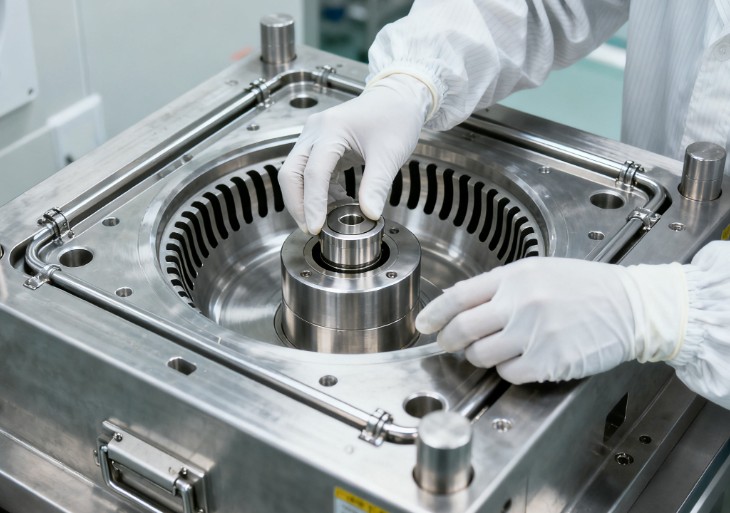
Core Structural Design RequirementsMold design strictly complies with GMP clean production standards, with cavity structures designed without dead ends to avoid pollution risks caused by material residue. A sealed molding structure is adopted, equipped with efficient exhaust systems to ensure no bubbles or pores inside samples, guaranteeing the biosafety of medical materials. The overall mold is made of stainless steel, with surfaces passivated to have good corrosion resistance and easy cleanability, adapting to high-temperature sterilization and disinfection processes in medical production environments.
Key Technical Parameters
Material standards: Materials in contact with materials meet ISO 10993 biocompatibility standards, with no cytotoxicity or sensitization risks.
Dimensional accuracy: Cavity dimension tolerance controlled within ±0.003mm, sample thickness uniformity error ≤±0.005mm, meeting the precision requirements of implantable devices.
Surface quality: Mold cavity surface roughness Ra≤0.05μm, with smooth sample surfaces free of particle adhesion, ensuring the biocompatibility and fluid compatibility of medical materials.
Cleanliness level: The mold molding area reaches Class 7 cleanliness, which can be directly used in Class 10,000 cleanrooms without additional cleaning treatment.
Production Application ScenariosMainly used for preparing samples of medical polymer materials (polylactic acid, polyetheretherketone, silicone rubber), medical metal materials (titanium alloy, 316L stainless steel), and medical ceramic materials (alumina, zirconia). Samples are used for biocompatibility testing (cytotoxicity, hemocompatibility), mechanical performance testing (tensile strength, fatigue life), and sterilization stability testing (high-temperature steam sterilization, gamma-ray sterilization), providing key data support for the R&D and registration of medical devices and implantable devices. In the in vitro diagnostic field, it can adapt to the molding and performance verification of samples such as test reagent carriers and microfluidic chips.
Technical Development TrendsWith the development of personalized medicine, molds are developing towards customization and flexibility. Flexible cavity technology is adopted to quickly adjust mold parameters to meet the personalized sample preparation needs of different patients. Additive manufacturing technology is integrated to realize rapid prototyping of medical sample molds with complex structures, shortening the R&D cycle. Meanwhile, sterile integrated molds are developed, integrating molding and sterilization processes to reduce pollution risks during sample transportation, further improving the production efficiency and safety of medical samples.