Requirements for Customization of Medical-Grade Plastic Parts: Materials and Processes
Plastic parts are widely used in healthcare, ranging from low-cost disposables like syringes and infusion tubes to high-end implantable medical devices and equipment housings. Given their direct impact on patient safety, the customization of medical-grade plastic parts demands stringent standards for materials and processes.
1. Material Requirements for Custom Medical-Grade Plastic Parts
1.1 Biocompatible Material Selection
Biocompatibility is a core criterion for medical-grade plastics, ensuring no adverse reactions (e.g., immunity, toxicity, allergy) when in contact with human tissues or fluids. Internationally, biocompatibility is evaluated per ISO 10993 standards, covering cytotoxicity, sensitization, irritation, genotoxicity, and systemic toxicity. For example:
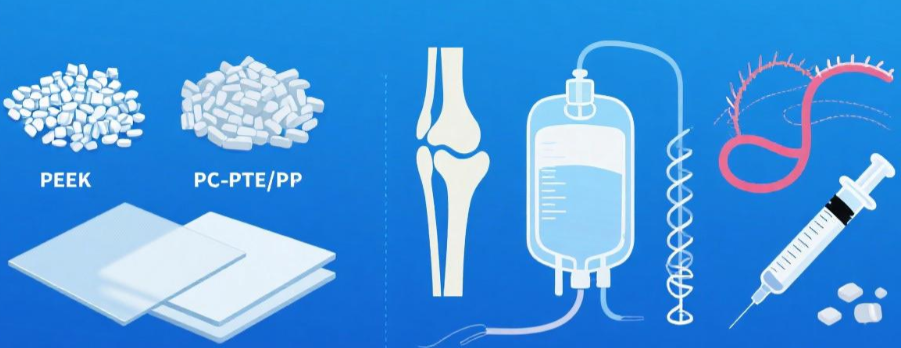
PEEK: Excels in biocompatibility and mechanical performance, ideal for orthopedic implants and spinal fusion devices.
PC: Passes multiple biosafety tests, used for transparent medical components like hemodialyzer housings and masks.
1.2 Chemical Stability and Corrosion Resistance
Plastic parts must resist degradation and avoid leaching harmful substances when exposed to disinfectants, drugs, or bodily fluids.
PTFE: Chemically inert, suitable for vascular catheters and tracheal intubation.
PP: Tolerates most acids, alkalis, and salts, used in disposable syringes and infusion bottles.
1.3 Sterilization Compatibility
Medical products require sterilization (moist heat, dry heat, ethylene oxide, irradiation). Materials must remain stable:
PPSU: Withstands repeated moist heat sterilization (121°C, 15-30 mins) without deformation, used for surgical instrument cases.
Medical silicone: Low ethylene oxide adsorption, preventing residual hazards post-sterilization.
1.4 Traceability
Full traceability is mandatory from procurement, including supplier info, batch numbers, quality reports, and delivery dates. For implantables (e.g., PEEK components), detailed records enable rapid root-cause analysis for quality issues.
2. Process Requirements for Custom Medical-Grade Plastic Parts
2.1 Injection Molding
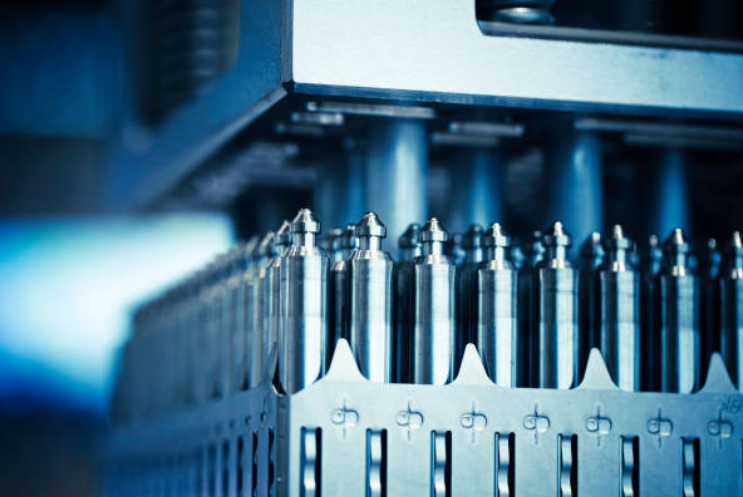
Equipment Precision: Electric injection molding machines with closed-loop servo systems control pressure fluctuation within ±1% and holding pressure repeatability at ±0.5MPa, ensuring product weight variation <0.1% (e.g., insulin pen cartridges).
Mold Design: Tolerances controlled at ±0.005mm, surface polished to Ra≤0.2μm (with hard chrome plating or DLC coating). Helium leak testing ensures cavity sealing; ultrasonic cleaning and re-inspection after 5,000 cycles.

Parameter Optimization:
Temperature: PP (melting point 160-170°C) requires barrel temp 180-230°C (avoid >250°C to prevent degradation).
Mold Temp: 50-80°C for crystalline plastics (e.g., PE for insulin pen housings) vs. 20-40°C for amorphous plastics (e.g., PVC for eye-drop bottles).
Pressure: 100-150MPa for thin-walled parts (<1mm) and 80-100MPa for thick-walled parts (>3mm), with fluctuation ≤5%.
2.2 Extrusion Molding
Screw/Barrel Design: L/D ratio 25-30, compression ratio 2-4, ensuring uniform plasticization (e.g., infusion tubes).
Temperature/Pressure Control: PVC tube production uses barrel temp 160-190°C and die temp 170-180°C; real-time monitoring prevents uneven wall thickness.
Shaping/Cooling: Vacuum sizing + spray cooling for tubes (diameter tolerance ±0.1mm); three-roll calendering for sheets (thickness tolerance ±0.05mm).
2.3 Blow Molding
Parison Precision: Co-extrusion for multi-layer products (e.g., infusion bags); die gap tolerance ±0.02mm, parison wall variation ±0.05mm.
Pressure/Time Control: 0.2-0.6MPa and 5-15s for medical bottles.
Mold Design: Surface polished to Ra≤0.4μm; insert structures for complex parts (e.g., nebulizer housings).
2.4 Cleanroom & Quality Control
Cleanroom Standards: ISO 7 (class 10,000) or higher; ISO 5 (class 100) for implants. Controls: ≤3520 particles/m3 (≥0.5μm), ≤10 CFU/plate (settleable bacteria); monthly ATP testing.
Quality Testing:
Incoming: Biocompatibility reports, FDA 510(k) verification, MI and color difference (ΔE≤1) sampling.
In-process: Laser diameter measurement, machine vision for surface defects.
Final: Physical (tensile strength), chemical (leachables), and biological (biocompatibility, microbial limit) tests.
Stringent material and process controls are fundamental to safe, effective medical-grade plastic parts. Rigorous oversight across sourcing, production, and testing ensures reliability for healthcare applications.