What are the common processing techniques for plastic parts
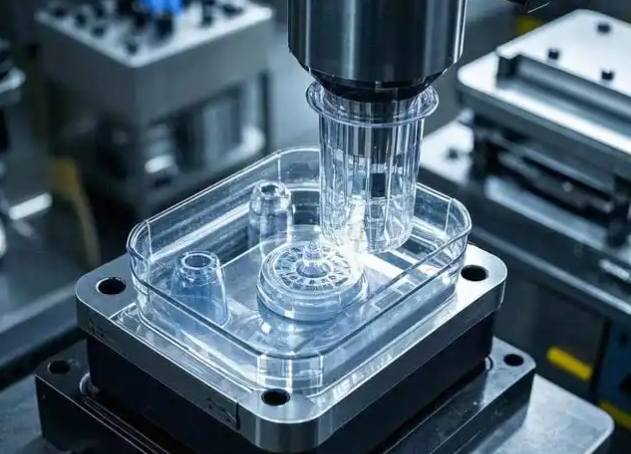
Principle: Granular or powdered plastic is added into the barrel of an injection molding machine. After heating, it is melted and plasticized. Driven by the screw or plunger of the injection molding machine, the molten plastic is injected into the closed mold cavity at high pressure and high speed. After cooling and setting, the mold is opened to take out the product.
Characteristics: Short molding cycle, capable of forming plastic parts with complex shapes, precise dimensions, and with metal or non-metal inserts in one go. High production efficiency, easy to achieve automated production, suitable for mass production. However, the equipment and mold costs are high, and it is not suitable for small-batch production.
Applications: Widely used in industries such as electronics and electrical appliances, automobiles, daily necessities, and medical devices, such as mobile phone casings, automobile dashboards, plastic cups, syringes, etc.
Principle: The plastic raw material is added into the barrel of an extruder. Driven by the rotation of the screw, the plastic moves forward along the screw groove. At the same time, it is gradually melted and plasticized under heating and shearing. The plastic in a viscous flow state is continuously extruded from the die head. Through a specific-shaped die orifice, a continuous profile with a certain cross-sectional shape and size is formed. After cooling, setting, and traction processes, the required plastic product is obtained.
Characteristics: High production efficiency, capable of continuous production, and can manufacture various shapes of plastic profiles, such as pipes, plates, rods, films, and insulation layers of wires and cables. The equipment investment is relatively low, the operation is simple, and the product quality is stable.
Applications: Widely applied in fields such as construction, agriculture, packaging, and electronics, such as plastic door and window profiles for construction, water supply pipes, plastic films for agriculture, and insulation protection sleeves for wires and cables.
Principle: A molten plastic parison is placed in the mold cavity. Then, compressed air is introduced into the parison, and the parison is blown up and closely attached to the wall of the mold cavity under the action of gas pressure. After cooling and setting, the mold is opened to obtain a hollow plastic product.
Characteristics: Mainly used for manufacturing various hollow plastic products, such as plastic bottles, plastic barrels, and plastic toys. It can form complex-shaped hollow products, and the products have good integrity and strength. The production efficiency is relatively high, and the cost is relatively low.
Applications: Widely used in the packaging industry, such as beverage bottles, cooking oil barrels, cosmetic bottles, etc., and also used for manufacturing some small hollow toys and automotive parts.
Principle: A thermoplastic sheet is heated to a softened state, and then pressure is applied to make it closely adhere to the surface of the mold cavity. After cooling and setting, the formed product is taken out from the mold. The methods of applying pressure include vacuum suction, compressed air pressure, mechanical pressure, etc.
Characteristics: The equipment is relatively simple, the mold cost is low, the production cycle is short, and large-sized plastic parts can be formed. However, the dimensional accuracy and surface quality of the products are relatively low, and it is generally suitable for products with low precision requirements.
Applications: Commonly used for manufacturing disposable tableware, food packaging trays, billboards, automotive interior parts, etc.
Principle: A certain amount of plastic raw material (such as molding compound, sheet molding compound, etc.) is placed in the preheated mold cavity. Then, the mold is closed. Under a certain temperature and pressure, the plastic raw material undergoes physical and chemical changes in the mold. After curing and setting, the required plastic product is obtained.
Characteristics: It can form large-sized and complex-shaped plastic parts. The products have high dimensional accuracy and surface quality, and good mechanical properties. But the production cycle is long, the production efficiency is low, and the mold cost is high.
Applications: Commonly used for manufacturing electrical insulation products, automotive parts, aerospace parts, composite products, etc., such as TV casings, automotive bumpers, aircraft interior parts.
Principle: Plastic powder is added into the mold. The mold is rotated while being heated, so that the plastic powder is evenly attached to the inner wall of the mold under the action of gravity and centrifugal force. It is heated and melted and gradually plasticized. After cooling and setting, the product is demolded.
Characteristics: It can produce large-sized and integral hollow plastic products. The products have no seams, high strength, and uniform wall thickness. The mold structure is simple and the cost is low, but the production cycle is long and the production efficiency is low.
Applications: Mainly used for manufacturing large containers, water tanks, trash cans, children's playground facilities, ships, etc.
Principle: A paste-like plastic (such as PVC paste) is poured into a preheated mold. It is gelled or plasticized on the surface of the mold by heating. Then, the excess un-gelled or un-plasticized plastic is poured out. After further heating and curing, the product is demolded.
Characteristics: It can manufacture plastic products with a soft and elastic surface, such as toys, artificial leather, automotive interior parts, etc. The process is simple, and the mold cost is low, but the production efficiency is low, and the dimensional accuracy and surface quality of the products are relatively low.
Applications: Commonly used for manufacturing toy dolls, automobile steering wheels, dashboards, armrests, etc.
Principle: Two or more liquid raw materials with reactive activity are quickly mixed under high pressure and then injected into the mold cavity. A chemical reaction occurs in the mold, and after curing and molding, a plastic product is obtained.
Characteristics: It can form large-sized and complex plastic products under relatively low pressure. The production efficiency is high, and the products have good mechanical properties and dimensional stability. However, the equipment investment is large, the raw material cost is high, and strict requirements are imposed on the storage and transportation of raw materials.
Applications: Mainly used for manufacturing automotive parts, aerospace parts, building materials, etc., such as automotive bumpers, seats, aircraft wings.
Principle: A high-energy-density laser beam is used to irradiate the surface of the plastic, causing the plastic to be locally melted or vaporized. By controlling the path and energy of the laser beam, processing operations such as cutting, engraving, welding, and punching of the plastic can be achieved.
Characteristics: High processing precision, capable of achieving micron-level or even higher precision processing; fast processing speed and high production efficiency; non-contact processing, which will not generate mechanical stress and deformation on the plastic parts; can process various complex shapes and patterns.
Applications: Widely used in industries such as electronics, medicine, automobiles, and packaging, such as engraving of mobile phone keys, cutting of electronic components, micro-processing of medical devices, and pattern making of automotive interior parts.
Principle: Based on the principle of discrete-stacking, a three-dimensional model is sliced layer by layer in a certain direction to obtain the two-dimensional contour information of each layer. Then, through a specific molding technology, the material is stacked layer by layer according to these two-dimensional contour information to finally form a three-dimensional solid model.
Characteristics: It can quickly manufacture plastic parts with complex shapes and structures without the need for molds, greatly shortening the product research and development and production cycle; it can achieve personalized customization to meet the needs of different users; however, the current 3D printing speed is relatively slow, the material cost is high, and the mechanical properties and precision of the products are limited.
Applications: Widely used in fields such as product design, medicine, education, and cultural creativity, such as rapid prototype manufacturing, customized medical devices, teaching models, artworks, etc.