久久精品国产国产精-中文字幕久久波多野结衣av-精品久久久久久中文字幕无码vr-亚洲国产一区二区三区波多野结衣-最新国产精品久久精品

Technical document

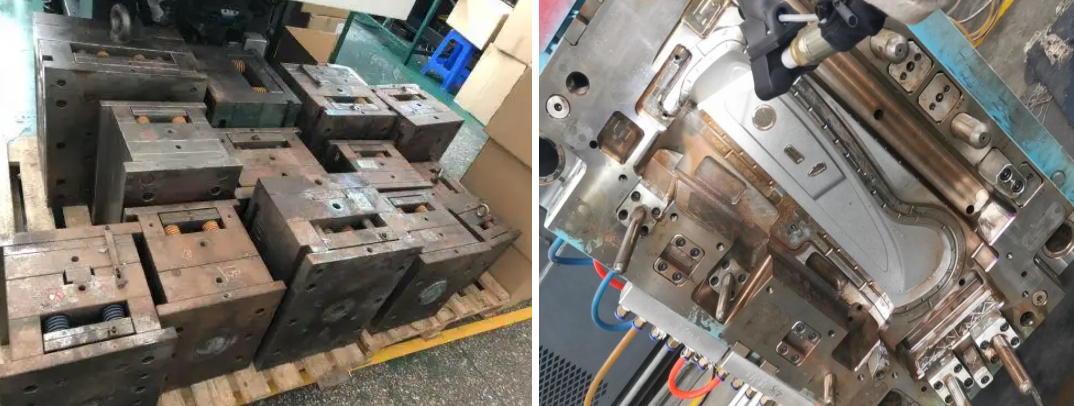
Injection molding mold rust and elimination method

2024-12-25 16:43:34 Die rust removal method

Causes of Rust

  1. High Environmental Humidity

    • In high - humidity environments like the southern Meiyu season (where relative humidity can reach 80% or more), water vapor permeates and forms an invisible water film on the mold surface. Water reacts with the iron in the mold. Iron, as the negative electrode, loses electrons to become ferrous ions. These combine with dissolved oxygen in water to form ferrous hydroxide, which further oxidizes to rust (Fe?O?). Even in dry areas, poor ventilation can cause local humidity build - up and lead to mold rust.

  2. Decomposition of Plastic Raw Materials

    • Some high - temperature - processed plastics, such as polyvinyl chloride (PVC), decompose and release hydrogen chloride gas during injection molding when the processing temperature approaches or exceeds their thermal stability limit. Hydrogen chloride, being strongly acidic, corrodes the mold surface, destroying its passivation film and exposing the bare metal, thus accelerating rust. Plastics with brominated flame retardants may also release corrosive hydrogen bromide at high temperatures.

  3. Release Agent - Related Issues

    • Using low - quality release agents with impurities, water, or easily - oxidizing components can cause problems. Instead of isolating the product and the mold, they can contribute to rust. For example, some water - based release agents leave residues after rapid water evaporation at high temperatures, creating conditions for rust. Excessive spraying of release agents leads to accumulation in mold grooves and gaps, which is hard to clean, absorbs water vapor, and indirectly corrodes the mold.

  4. Mold Processing Defects

    • High surface roughness (Ra value of 10 microns or higher) in the mold cavity increases the contact area with external substances, making it easier for water vapor and corrosive gases to adhere. Tool marks left during processing have concentrated stress, and under corrosive media, they form corrosion pits that spread. Improper heat treatment processes like quenching and tempering make the mold's internal structure unstable, increasing surface metal activity and rusting rate.

  5. Lack of Maintenance

    • Failure to clean the mold after use allows plastic particles and flash debris to absorb moisture. Additives and plasticizers in these residues can erode the mold. Lack of regular inspection and anti - rust maintenance means that small amounts of corrosive substances accumulate over time. When the mold is idle for long without protection (such as oil coating and wrapping), it can rust within months.

    injection mould

Elimination Methods

  1. Environmental Control

    • Install humidity monitors in the workshop. When humidity exceeds 60%, use industrial dehumidifiers to reduce it to 40% - 50%. Improve ventilation by arranging vents properly. For high - precision molds, use small temperature - and - humidity - controlled storage cabinets.

  2. Optimization of Raw Materials and Media

    • Adjust injection - molding parameters for easily - decomposing plastics. For PVC, lower the processing temperature by 5 - 10 °C and shorten material residence time. Choose high - quality release agents, preferably fluorine - or silicon - based ones. Follow the product manual's dosage and spraying method.

  3. Mold Repair and Strengthening

    • For molds with processing - defect - related rust, use grinding and polishing to reduce the cavity surface roughness Ra value to 0.2 - 0.8 microns. Micro - grind stress - concentrated areas like tool marks and check for residual stress with an ultrasonic flaw detector. Eliminate residual stress with stress - relief annealing. Repair and strengthen worn parts with technologies like brush plating and laser cladding.

  4. Standard Maintenance Process

    • After each use, clean the mold with a high - pressure hot - steam spray gun, then dry it with cold air. Spray a special mold anti - rust agent. For long - term idle molds, apply anti - rust oil, wrap with anti - rust paper and plastic film, and store on a dry shelf. Regularly check the package.

  5. Advanced Rust - Removal Treatment

    • For slight rust, soak in white vinegar for 30 minutes to 1 hour, rinse, polish with 0 - grade fine sandpaper, and then prevent rust. For moderate rust, use chemical rust removers (e.g., those with phosphoric acid or citric acid), cover with plastic film for 2 - 3 hours, rinse, clean with an ultrasonic cleaner, and then dry and prevent rust. For severe rust, use mechanical rust - removal like glass - bead sandblasting (80 - 120 - mesh glass beads, 0.3 - 0.5 MPa pressure), then clean, test, and comprehensively repair and prevent rust.

injection mould


Home
Product
News
Contact
主站蜘蛛池模板: 大学生高潮无套内谢视频| 少妇愉情理伦片丰满丰满| 国产舌乚八伦偷品w中| 上海少妇高潮狂叫喷水了| 亚洲国产成人精品无码区在线秒播 | 精品福利视频一区二区三区| 中文国产成人精品久久久| 国产亚洲色婷婷久久99精品| 中文字幕日产乱码一区| 免费无码又爽又刺激高潮的app| 久久九九国产精品怡红院| 久久视频在线视频精品| 亚洲第一无码xxxxxx| www插插插无码视频网站 | 久久无码中文字幕无码| 综合 欧美 亚洲日本| 久久久久人妻精品区一三寸| 亚洲日本一区二区三区在线播放| 国产精品久久久久久久免费看| 成人免费区一区二区三区| 亚洲综合色婷婷在线影院p厂| 18?流白浆??小蘑菇| 欧美尺码专线欧洲b1b1| 久久久g0g0午夜无码精品| 欧洲熟妇精品视频| 大桥久未无码吹潮在线观看| 日本三级吃奶头添泬无码苍井空| 丰满熟妇人妻av无码区| 国产精品区一区二区三在线播放| 狼人亚洲国内精品自在线| 制服丝袜亚洲中文欧美在线| 成人精品免费视频在线观看| 强奷漂亮少妇高潮在线观看| 久久无码专区国产精品s| 大香伊蕉在人线国产最新75| 成码无人av片在线电影网站| 精品亚洲国产成人a片app| 成人亚洲欧美丁香在线观看| 双腿张开被9个黑人调教作文| 亚洲国产av无码综合原创国产| 久久免费午夜福利院|